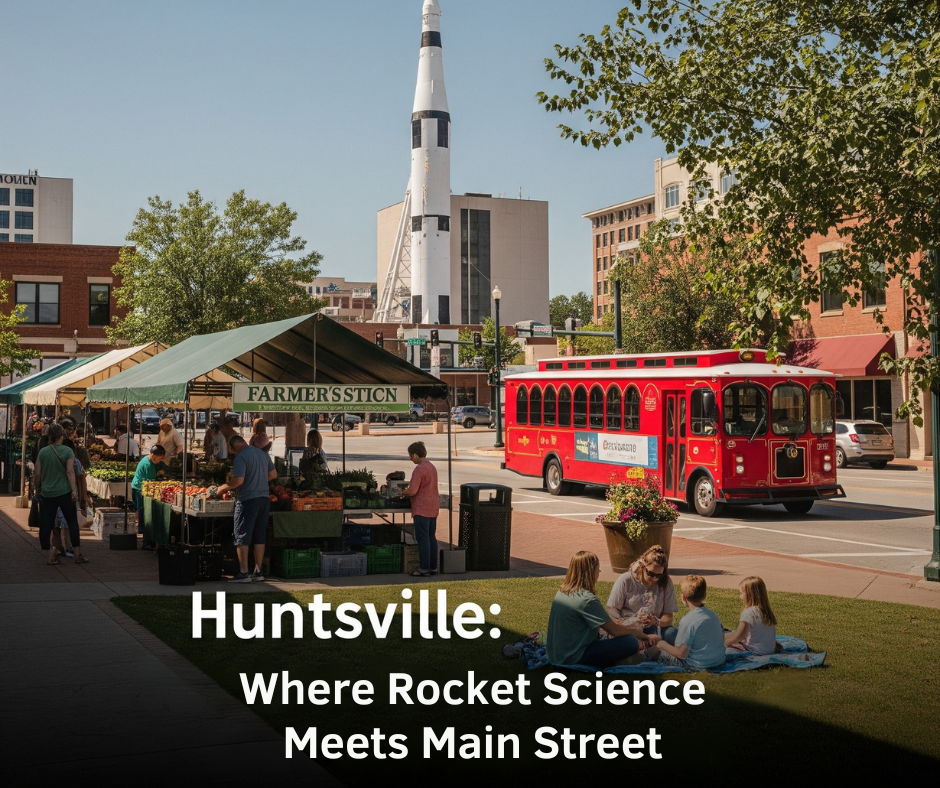
Thinking about making Huntsville, Alabama, your new home? You're not alone. As a real estate broker helping countless families relocate here, I consistently hear similar questions about what life is truly like in the Rocket City. My goal today is to go beyond the glossy brochures and give you honest, direct answers to your most pressing questions about jobs, schools, cost of living, and the unique aspects of living in Huntsville.
Huntsville's Dynamic Job Market: More Than Just Rockets
When people think of Huntsville, engineering and science often come to mind, largely due to Redstone Arsenal and Cummings Research Park. While these are core industries in our economy, the real question I hear is, "Are there other opportunities for my spouse or family members?" The short answer is yes.
Huntsville's economy is surprisingly diversified and continuously growing. Beyond government contractors and agencies, we have a significant manufacturing presence with companies like Toyota (two plants here) and Polaris. Logistics, shipping, and warehousing are also strong sectors, benefiting from our train access and waterways.
Education is a huge industry here, with a total of seven universities, colleges, and community colleges across North Alabama. The service sector has shown quite a bit of growth recently, with numerous hotels supporting our conference tourism, and all the downstream businesses like restaurants and retail. I see this growing diversification as a major strength. There are currently thousands of job openings in the Huntsville area on platforms like Indeed, many of which are fresh postings, not stale listings. Regardless of your industry, you are likely to find rewarding opportunities.
Work-Life Balance and Job Stability
A common concern among those eyeing government contracting roles is work-life balance. My observation is that this varies greatly. Some companies offer enviable benefits like every other Friday off or half-days without making up time. Others expect a more intense work weeks, frequently going into overtime territory; particularly those driven by mission critical government contracts.
Knowing which company offers which kind of work-life environment can be hard to tell from afar. The good news is that resources are available online (and I can share insights based on client experiences) to help you identify which companies align with your work-life expectations.
Regarding job stability, for decades, government jobs were considered almost 100% stable. While recent political shifts have introduced some changes, with a few government employees experiencing layoffs or early retirement requests, it is important to understand this is not widespread in Huntsville. Many local programs have actually seen increased funding and new contracts. We remain on an upward growth trajectory. What I often see is that if someone is laid off from one contract, they quickly find another role, often just across the street, especially if they have a strong professional network. Building connections once you are here is critical for career longevity.
The Startup Scene: A Growing Ecosystem
Is Huntsville a good environment for startups? People are asking about funding, mentorship, and physical spaces. I would say it is significantly better than it was five years ago, although we are not Silicon Valley. We are seeing more incubators, venture capital interest, and mentorship programs emerge. There's a growing interest from investors in supporting smaller companies. While it's still developing, the momentum is positive.
Cost of Living: Beyond the Home Price
You know houses are generally less expensive here, and property taxes are lower than in many states, but what else should you budget for? Here are some insights:
- Flood Insurance: This can be a surprise for many. While widespread flooding is not common, certain areas are in flood zones, and policies can cost thousands annually. This is not a one-time fee.
- Tornado Insurance: You typically do not need separate tornado insurance; it is usually covered under standard policies. The media often exaggerates the prevalence of tornado damage here, so additional riders are generally unnecessary.
- Utilities: These are generally affordable, close to the national average. We see spikes in summer due to air conditioning, but Alabama’s extensive waterways provide inexpensive hydroelectric power, keeping costs down. Natural gas from the Alabama coast also contributes to affordability.
- Groceries & Gas: Groceries are slightly below average, and gas is significantly cheaper due to proximity to refineries and lower state taxes compared to coastal areas.
Your Salary in Huntsville: Living Like a King
If you are moving here for a remote position and retaining a higher salary from a High Cost of Living (HCoL) area like Seattle or San Francisco, you will live exceptionally well. A household income of $200,000 or more here provides a wonderful quality of life. Even at lower income levels, the quality of life is excellent.
While salaries coming from major coastal cities might see a reduction, Huntsville salaries are, on average, $10,000 above the national average. Combine this with a cost of living that is 8% to 13% lower than the national average, and you have a significant financial advantage. This "delta" between higher income and lower expenses provides many Huntsville area transplants with quite a bit of disposable income, allowing for more choices in monthly spending, saving, and retirement contributions, which may not be feasible in other areas. My website has a cost of living calculator to help you translate your current salary.
Finding Your Tribe: Community and Social Life
Concerns about finding a community and being welcomed are common for transplants. Huntsville is truly a melting pot. I have helped people relocate from all six habitable continents. You will not be the only new person here. The local population is well-educated, accepting, and generally enjoys debate over argument.
While we are not a late-night party town like Atlanta or Nashville (our nightlife is still developing), there are always activities for everyone. I see a diverse population, so you won't be the only new person in town looking to make connections.
Things to Do: Outdoors, Sports, and Culture
Huntsville is a paradise for outdoor enthusiasts. While July and August bring intense heat and humidity, the remaining ten months offer outstanding weather for activities like kayaking, fishing, hiking, hunting, shooting, archery, and dog sports. If it can be done in the sunshine, it can be done here.
For those who prefer indoor pursuits, Huntsville offers a wide array of options, especially for families. We have numerous indoor gymnasiums, sports teams, and museums. There are also many sporting events, including the minor league baseball team, the Trash Pandas in Madison, the new Huntsville City Football Club, and the Huntsville Havoc hockey team. High school sports are also a major draw.
The new Orion Amphitheater hosts large-name concerts and festivals. Speaking of festivals, from May to October, you'll find eight to ten farmers markets every weekend, often accompanied by art vendors and other local festivities. These events are spread throughout the area, each with its own unique vibe. Places like Lowe Mill ARTS & Entertainment host events almost every weekend.
Beyond the mainstream, there are countless civic and social organizations. I've had clients discover thriving "underground" communities for niche hobbies like quilting, with nationally recognized figures. The opportunities for engagement are everywhere; you just need to get out and explore.
Traffic and Commuting: The Redstone Arsenal Factor
Compared to most large U.S. cities, Huntsville's traffic is surprisingly light. Having moved here from the D.C. area, I find it a breath of fresh air. However, there's one significant exception: Redstone Arsenal. With the return to work orders, we are seeing considerable backups, especially if accidents bottleneck specific gates. This is a crucial factor to consider when choosing a home.
While getting to the Arsenal itself isn't difficult, the wait times to enter can be substantial, particularly during peak rush hour when school drop-offs coincide with work commutes. Google Maps is an excellent resource for estimating commute times. You can set specific arrival and departure times for any day of the week to get a realistic picture of your potential commute. I recommend padding those estimates until you become familiar with the local traffic patterns.
New Construction: Abundant Choices and Incentives
A common question is about the availability of new construction homes, where these communities are located, and what incentives are available. The good news is that there will not be a shortage of new construction homes anytime soon. Builders are continuously breaking ground, adding new phases to existing communities, and performing well in the current market.
New construction offers several advantages, especially in Alabama, which is a "buyer beware" state with limited seller disclosure laws. Builders are currently offering significant incentives to attract buyers in this higher interest rate environment. Many builders, especially those with in-house or tightly integrated lenders, are providing interest rates 2% to 3% below market rates. A 1% drop in interest rate can effectively feel like buying a home for 10% less.
While homes are not flying off the shelves as they once were, the market is balanced, and options are plentiful. The third and fourth quarters of the year are often the best times to purchase new construction, particularly "spec" or "inventory" homes (already started or finished by the builder). Builders are motivated to sell these to pay off their financing, leading to better incentives and more willingness to negotiate. My team has had considerable success negotiating favorable terms for our clients this year.
Property Values and Market Trends
Many people ask about which areas are peaking, up-and-coming, or stable. The entire Huntsville region continues to grow, with roughly 20 new residents arriving daily. People are buying homes across the city, its suburbs, and even exurbs.
We observe a premium on rural properties, especially those with acreage, and highly convenient locations. The "middle ground" of three to four-bedroom houses on the edge of the suburbs is where we see more flexibility in pricing and incentives, whether for new construction or existing homes. Prices can modulate throughout the year. For example, in July 2025, median prices saw slight fluctuations, with the Huntsville-Madison market experiencing a small dip.
This indicates a balanced market. Sellers who are not motivated to sell quickly may hold out for their desired price, especially if they have favorable interest rates or own their homes outright. However, with close to 5,000 homes on the market, there are ample options, and many sellers are willing to price attractively for buyers.
While there isn't one single "up-and-coming" area in terms of massive price spikes, Athens and East Limestone County are still experiencing rapid growth in terms of percentage. Hazel Green and Toney generally offer some of the lowest prices. We also see some minor movement towards Gurley, Arab, Guntersville, and south of the river towards Union Grove, though these could be blips rather than sustained trends. Outskirts of Madison and Limestone County remain solid choices for many buyers.
The School System: Beyond Alabama Stereotypes
One of the most frequent and critical questions is about the quality of schools. Many people, understandably, ask whether they should target Madison, the county, or Huntsville, often with underlying concerns about Alabama's educational reputation. My honest answer is that Huntsville and its surrounding areas boast some of the highest-ranking schools in Alabama and even nationally.
Both private and public schools here offer excellent educational experiences. My own children attend Madison City Schools, which consistently ranks highly on platforms like GreatSchools.org, Niche.com, and U.S. News and World Report. These resources provide well-rounded assessments, considering not just test scores but also parental input, diversity, and college readiness.
Friends and clients in Madison County Schools also rave about their experiences, highlighting strong academic programs and extracurricular activities. Huntsville itself has truly exceptional schools, including a world-class cyber technology school and various magnet programs. Huntsville High School, for instance, has a remarkable track record in swimming championships.
However, a word of caution: school districts can and do redistrict. While you will remain within the larger school district (e.g., Huntsville, Madison City, or Madison County), the specific school your child attends within that district could change.
A major point of confusion for many newcomers is Madison's unique addressing system. You could have a Madison mailing address and be zoned for East Limestone schools, paying East Limestone taxes. Alternatively, a Madison address could mean you're in Madison City, attending Madison City Schools, and paying Madison taxes. You might even have a Madison address and be in Huntsville or Athens.
If specific school zones or cities are important to you, we must confirm the boundaries for any home you consider. Do not rely solely on MLS listings for this information. I have seen situations where buyers have purchased significant homes only to find their children are zoned for a different school than expected, sometimes driving past multiple closer schools to get to their assigned one. This directly impacts property taxes as well, as some areas have higher local taxes to fund schools. Madison City, for example, has the highest local property taxes, though they are still significantly lower than those in many other states.
The Home Buying Process: What to Expect
When viewing homes on Zillow, you might notice some properties seemingly going under contract on the first day, especially new construction. This often happens for one of two reasons: the builder may have held back inventory, listing it in MLS only after it's under contract, or it could be a "ground-up" construction not listed until completion. For resale homes, these might be "pocket listings" where a deal is brokered off-market before being formally listed for data purposes. As your agent, I aim to ensure you see all available properties to find the best fit.
Negotiations and Closing Costs: In the current balanced resale market, we definitely have more room to negotiate closing costs, repairs, and even the purchase price. Alabama's real estate laws, particularly regarding buyer agency agreements, have adapted, allowing for commissions to be part of the negotiation at the time of contract. This allows for a more flexible approach, where we can work towards your desired outcome, whether it's a discount on the home or seller credits towards closing.
I always aim to help you get a great deal, but it's important to have realistic expectations. While the market is balanced, sellers are generally not desperate to give homes away. Lowball offers on properly priced homes are unlikely to succeed. We can discuss specific negotiation strategies based on the property and market conditions.
Older Homes and Inspections: As a "buyer beware" state, Alabama has limited seller disclosure laws. Sellers are only required to disclose known health or safety issues, or if they are a realtor and it's a known issue, or if you ask directly and they know the answer. This makes thorough inspections paramount, especially for older homes or those that haven't been recently maintained or updated.
We need to consider potential issues like galvanized or lead piping, asbestos, and lead paint, as well as the condition of the roof, HVAC, and foundation. My recommended recommended inspectors are highly thorough, often finding things even a professional contractor might miss.
We can also bring in trusted contractors to provide estimates for repairs, allowing us to factor those costs into our negotiations. Sometimes, instead of repairs, we negotiate a reduction in the purchase price or cash toward closing, giving you the flexibility to address issues after you move in. The goal is always to ensure you are comfortable with the condition of the home and the financial implications.
Multiple Offers and Bidding Wars: Many people wonder if Huntsville is still a market with multiple offers and bidding wars. My observation is that these are less common now than they were a few years ago. While some unique, highly desirable properties, especially at the higher end of the price range (around $750,000 and up) or the very low end (under $275,000), might still attract multiple bids, it is not the norm.
We've seen instances of homes getting many offers, but others sit on the market for months. The key factor is how well a home is priced and presented. A well-maintained home in a good location, marketed effectively, will still generate significant interest. As we move into the fall and winter, the market typically becomes less competitive, with fewer multiple offers.
My advice is that while we aim for the best possible deal, coming in with an extremely lowball offer on a properly priced home is unlikely to be successful in this balanced market. We will work to negotiate effectively for you, whether that means a price reduction, closing cost credits, or repair concessions.
Property Taxes: Understanding the Real Costs
Property taxes in Alabama can be confusing, especially if you're relying on online estimates from sites like Zillow. The truth is, those numbers may or may not be accurate for your specific situation.
Alabama taxes in arrears, meaning the taxes you pay reflect the previous year's assessment. The county or city assesses the value of a home, and this assessment can lag behind the current market value or sales price. While assessors are technically not supposed to "chase the sales price," in practice, I often see taxes adjusted upward after a home sells for more than its last assessed value. For example, if a home was assessed at $450,000 but you bought it for $480,000, your taxes might increase to reflect that higher purchase price.
Homestead Exemption: If the home will be your primary residence, you can apply for a homestead exemption, which effectively cuts your property taxes in half. Even secondary residences receive a significant discount.
Senior and Disability Exemptions: If you are 65 or older, there is a small discount on the state portion of property taxes. If you have a 100% permanent disability, your entire property taxes can be waived.
Important Considerations:
- Previous Use: If you purchase a home that was previously an investment property or not a primary residence, you will pay the full, non-homestead rate for the remainder of that year. The homestead exemption would apply starting the following year.
- New Construction: This is especially tricky. Builders often pay taxes on the land as unimproved or partially improved. Once you take ownership of a new home, the county flags it as a fully built property. The builder might credit you a small prorated amount, but you will likely face a much larger tax bill for the first year, as the property is now fully assessed and the homestead exemption may not apply until the following year. You must plan for this upfront.
While Madison City has the highest local property taxes to support its schools, they are still remarkably low compared to many other states. If school zones are not a priority, you might find even lower tax rates in other areas.
Home Inspections: What to Expect and Budget For
The cost of a home inspection can vary based on the size of the home and any additional specialized inspections you opt for.
Standard Home Inspection: For a typical 2,500 to 3,500 square foot home, a basic, thorough home inspection will usually cost between $450 and $600. This inspection typically lasts three to four hours and involves testing all major systems of the home.
Additional Inspections:
- Termite Inspection: Highly recommended, whether you have a mortgage or not. This typically costs around $150. Many homes have existing termite bonds that can be transferred, sometimes with a small fee (around $100) for a transfer letter.
- Specialty Inspections:
- Roof Inspection: Often done by a roofer if concerns arise from the general inspection.
- Foundation/Structural Engineer: If there are significant structural concerns, a licensed engineer might be needed. This initial site visit can cost around $450, with further assessments costing more.
- Sewer Scoping: Less common in our area but frequently requested by out-of-state buyers, these can range from $400 to $800.
- Surveys: Most homes are plotted at the city or county level, but these aren't always precise. While not typically obtained by every buyer, a full survey can range from $400 to $1,500, depending on the lot size and complexity. Surveys can also cause closing delays, so if you want one, we need to order it immediately.
I always recommend being overly cautious when it comes to inspections. If we see potential issues during our initial walkthrough, assume there may be more hidden problems. A well-vetted home inspector is crucial. I can provide recommendations for trusted inspectors and contractors who provide fair bids and quality work. We can then use these findings to negotiate repairs, credits, or a price reduction on the home.
Infrastructure: Internet, Utilities, and More
Concerns about infrastructure, particularly high-speed internet, are common, especially from those who associate Alabama with more rural areas. However, in Huntsville and its close-in suburbs, high-speed internet is readily available.
Google Fiber is here, offering speeds up to 8 gigabytes up and down. Other providers like AT&T also offer lightning-fast internet. While there are some lower-cost providers, I caution against them; some can be unreliable, especially during rain. If you work from home or rely on consistent internet, a reliable provider is essential. Unless you are moving to a truly rural area, you will not have issues finding high-speed internet, cable, and other modern utilities.
Health and Wellness: Allergies, Bugs, and Healthcare Access
Allergies: If you suffer from allergies, be prepared. Huntsville has a robust growing season, meaning various pollens are constantly in bloom throughout the year. While over-the-counter medications like Zyrtec or Claritin often provide relief, individuals with severe allergies might find certain seasons challenging. Hay fever is also relatively common.
Bugs: Yes, we have bugs, including mosquitoes. However, they are generally smaller than those found in some northern climates. Mosquitoes tend to be more active in shaded areas, during mornings and evenings. Bug spray is usually effective.
Healthcare: Access to doctors and nurses has significantly improved in recent years. While it was once common to face long waiting lists, many people now report getting appointments with new doctors within 30 days. If you rely on daily prescriptions, I still recommend getting a full refill before you move, just in case.
Local hospitals are expanding their emergency services, though emergency room wait times can be a common complaint from those whose conditions might not warrant an ER visit. Seriously ill patients are generally treated promptly. Huntsville's geriatric care often receives high marks. For highly specialized care, Nashville (1.5 hours north) offers a great children's hospital, and Birmingham (1.5 hours south) boasts UAB, a world-renowned hospital known for its comprehensive services.
Look and Feel of Different Areas: Mountains vs. Farmland
The scenic beauty often associated with Huntsville (mountains, green landscapes) is primarily found on the east side of the city, encompassing areas like Southeast Huntsville, Northeast Huntsville, Owens Cross Roads, and Gurley. These are low-lying mountains, easily traversed, though some roads like Cecil Ashburn Drive can be winding. Higher elevations might see a bit more snow, and the fall colors are stunning due to abundant hardwoods. In winter, the landscape turns grayer, though evergreen pine trees provide some year-round greenery.
The west side of Huntsville, including most of Madison, Athens, and Harvest (outside of Rainbow Mountain), is predominantly flat farmland or former farmland now developed into neighborhoods. If you see a corn or cotton field, a neighborhood might be there in five years. While you won't get mountain views on the west side, there are many opportunities to live on ponds, lakes, or creeks, often with existing tree lines.
I hope this comprehensive overview provides you with the "real dope" on what it's like to live in Huntsville.